click for context
A Workforce Risk Briefing

This is a virtual presentation of projects I’ve built as part of the HR career path I’m currently pursuing. The section below begins with an attrition analysis of the Goldman Sachs Bangalore branch, created using only open-source data. Please feel free to explore the page at your own pace and i hope you have fun.

Scroll to proceed through the analysis.

⚠️ Audio commentary ahead. Reduce volume or use headphones. And refresh the page if you dont hear any audio.

Executive Action Matrix

Where leadership should defend, automate, or maintain.
Executive Action Matrix

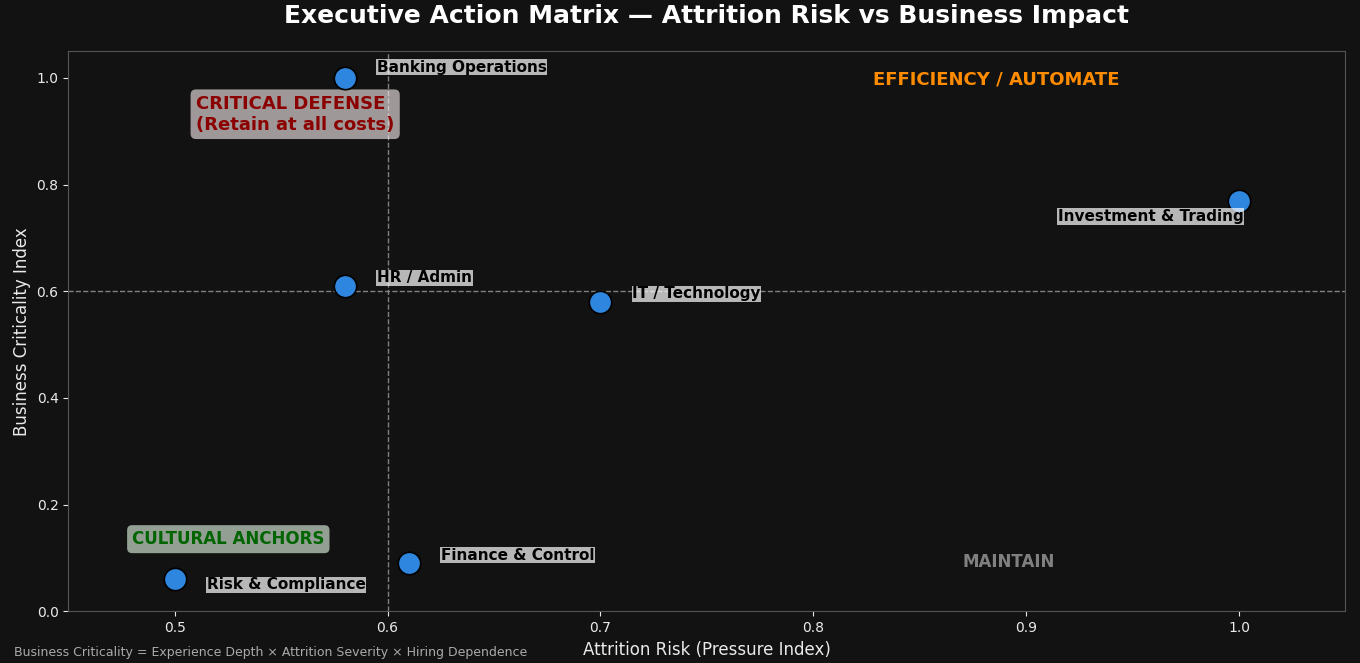
This matrix is the decision layer, converting insights from the previous three charts into clear executive actions. It positions roles by business criticality and risk exposure to prescribe proportionate responses, rather than diagnosing attrition itself. The key takeaway is that not all attrition warrants the same reaction: some roles demand aggressive retention, others justify automation or simplification, while some should simply be monitored. Leaders should use this matrix after identifying risk location, cause, and timing to apply the appropriate quadrant strategy — retain, automate, reinforce culture, or maintain. This chart answers what leadership should do next.
Hiring–Attrition Collision

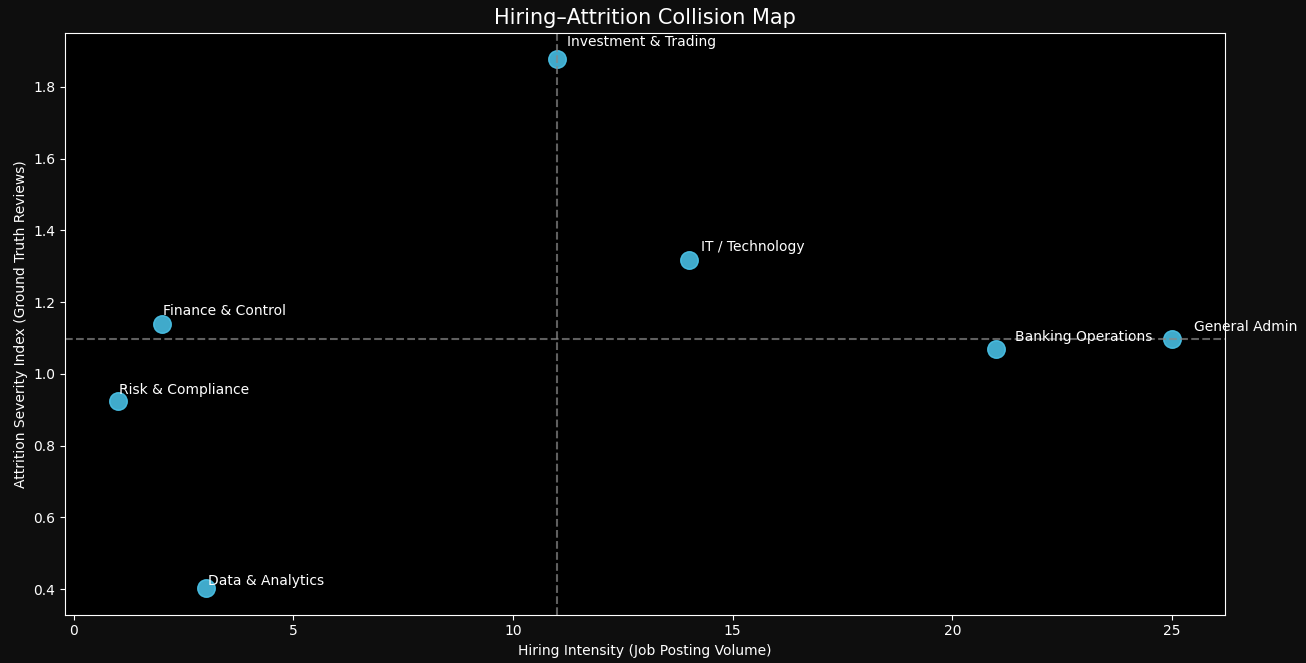
Hiring is concentrated where attrition pressure is already critical.

Hiring–Attrition Collision

This chart visualizes how hiring intensity intersects with attrition severity across role groups, highlighting where recruitment demand and workforce loss collide. Roles positioned high on attrition severity represent greater operational or knowledge impact when employees exit, while higher hiring intensity reflects replacement pressure. The key insight is that attrition risk is not evenly distributed: roles with high severity but lower hiring volumes signal concentrated knowledge risk, whereas roles high on both axes indicate immediate operational strain. The recommended approach is to prioritize retention and capability protection for high-severity roles, while pairing high-volume hiring roles with short-term retention and onboarding stabilization measures. This chart establishes where attrition risk is structurally embedded.

Talent Debt Signal

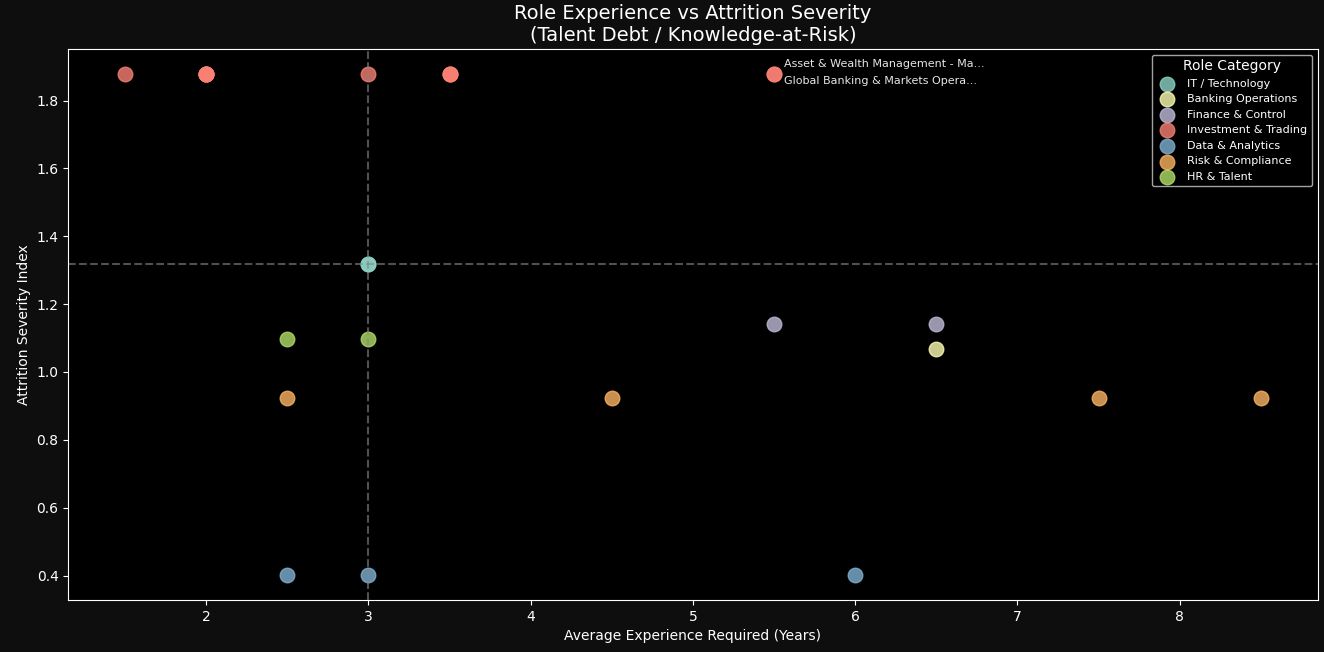
Senior experience loss is compounding faster than replacement capacity.

Talent Debt Signal

This view examines who holds critical knowledge by mapping average role experience against attrition severity. It reveals whether high-impact attrition is occurring in deeply experienced roles or disproportionately among less experienced staff. The key takeaway is the identification of talent debt: when attrition severity is high but average experience is low, essential knowledge is fragile, underdeveloped, or poorly transferred. The recommended response is proactive knowledge reinforcement — accelerated mentoring, documentation, shadowing, and succession planning — to reduce dependency on individual contributors. This chart explains why attrition in certain roles is especially dangerous.

Attrition Pressure Momentum

Pressure indicators show a forward-breaking risk window.

Attrition Pressure Momentum

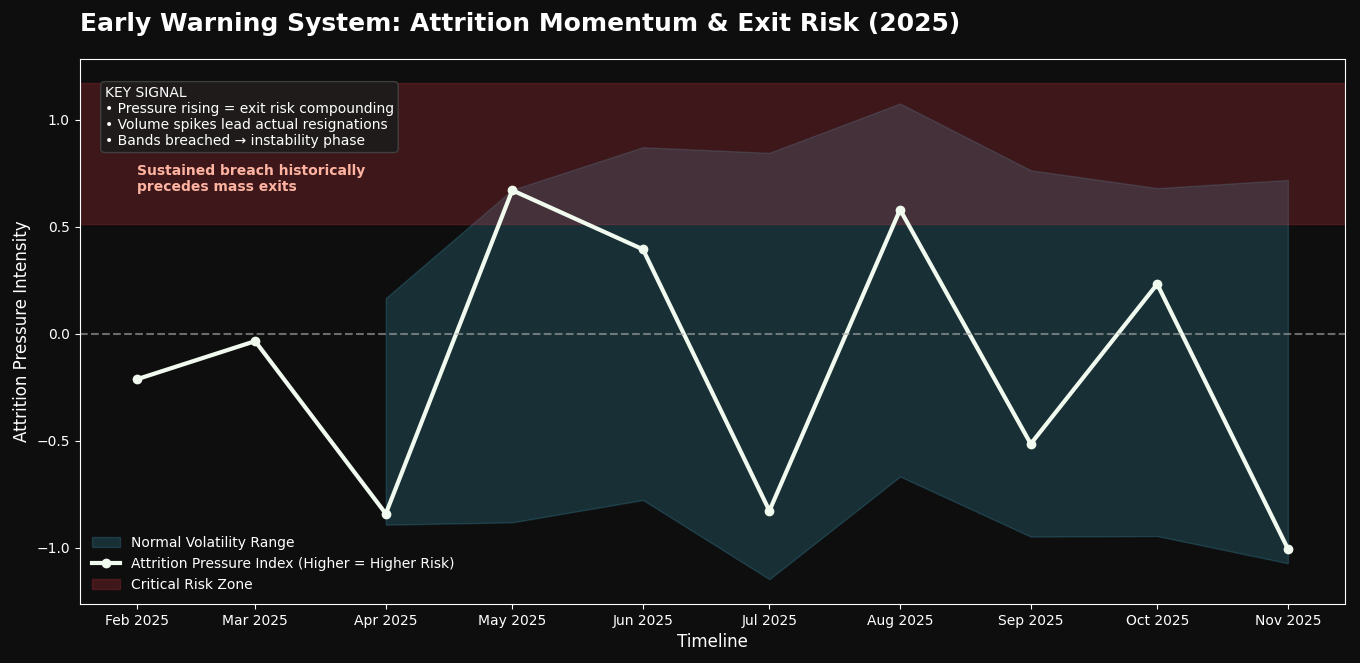
This timeline tracks attrition pressure momentum over time, using volatility bands and a critical risk zone to distinguish normal fluctuation from systemic instability. Rather than isolated spikes, sustained breaches of the normal range indicate compounding exit risk and historically precede mass resignations. The key takeaway is timing: attrition becomes most dangerous when pressure remains elevated across consecutive periods. The recommended action is to treat breaches as operational triggers, prompting immediate interventions such as manager outreach, workload correction, and retention conversations. This chart clarifies when attrition risk is escalating and requires intervention.

The Problem — In Simple Terms

Revolving door workforce problem

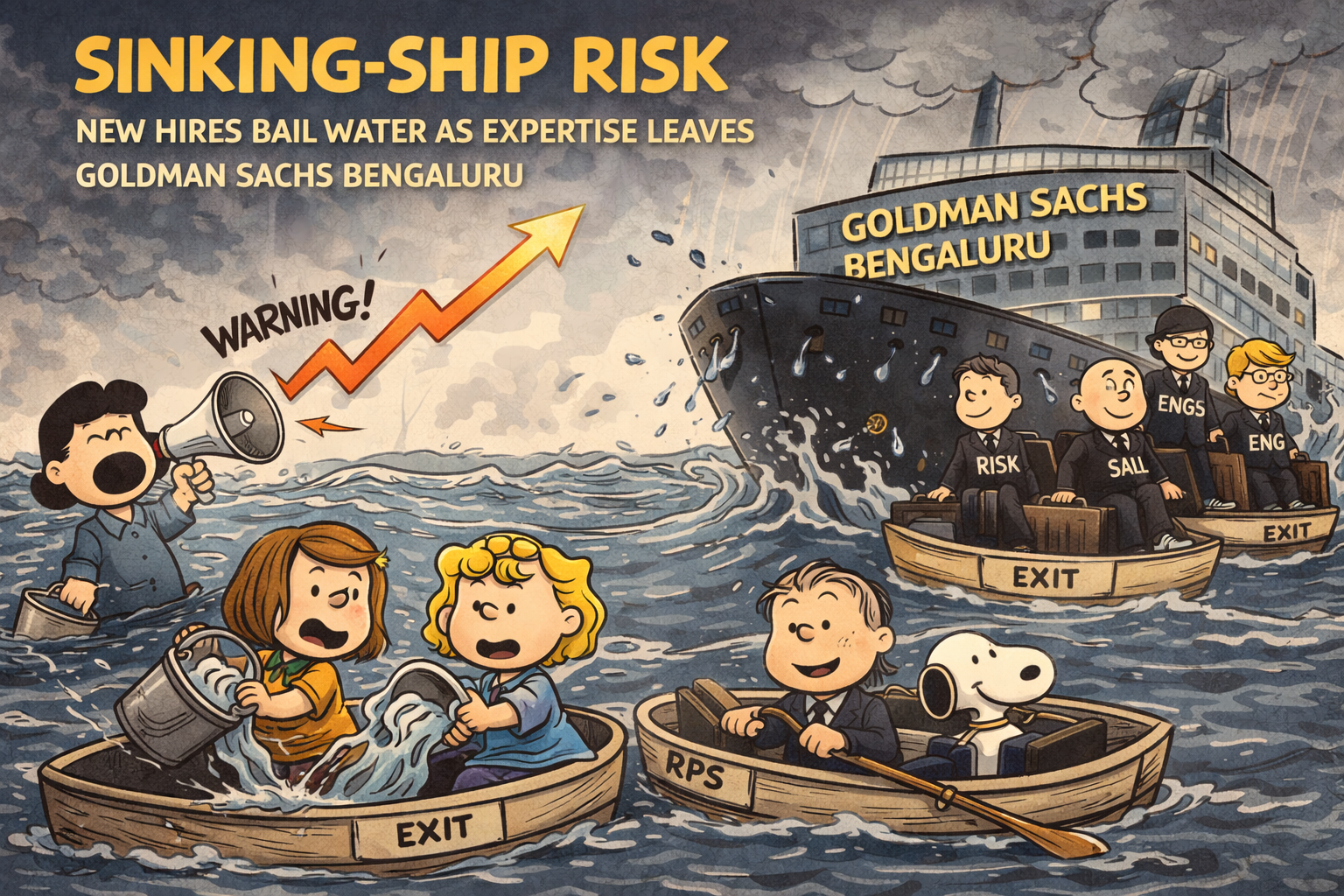
Problem summary. Put simply, this organization shows the classic signs of a revolving-door workforce risk. Hiring accelerates while mid- and senior-level expertise steadily exits. Headcount looks stable, but real capability erodes underneath. The same teams losing people are hiring the most. Recruitment is compensating for departures instead of rebuilding experience. The people leaving carry institutional knowledge from critical functions — Risk, Banking Operations, and core engineering — knowledge that junior hires cannot quickly replace. Employee sentiment spikes before resignation waves, meaning warning signals surface well before dashboards show a problem. This is a structural issue — not a hiring shortage.

The Solution — In Simple Terms

Strategic workforce defense solution

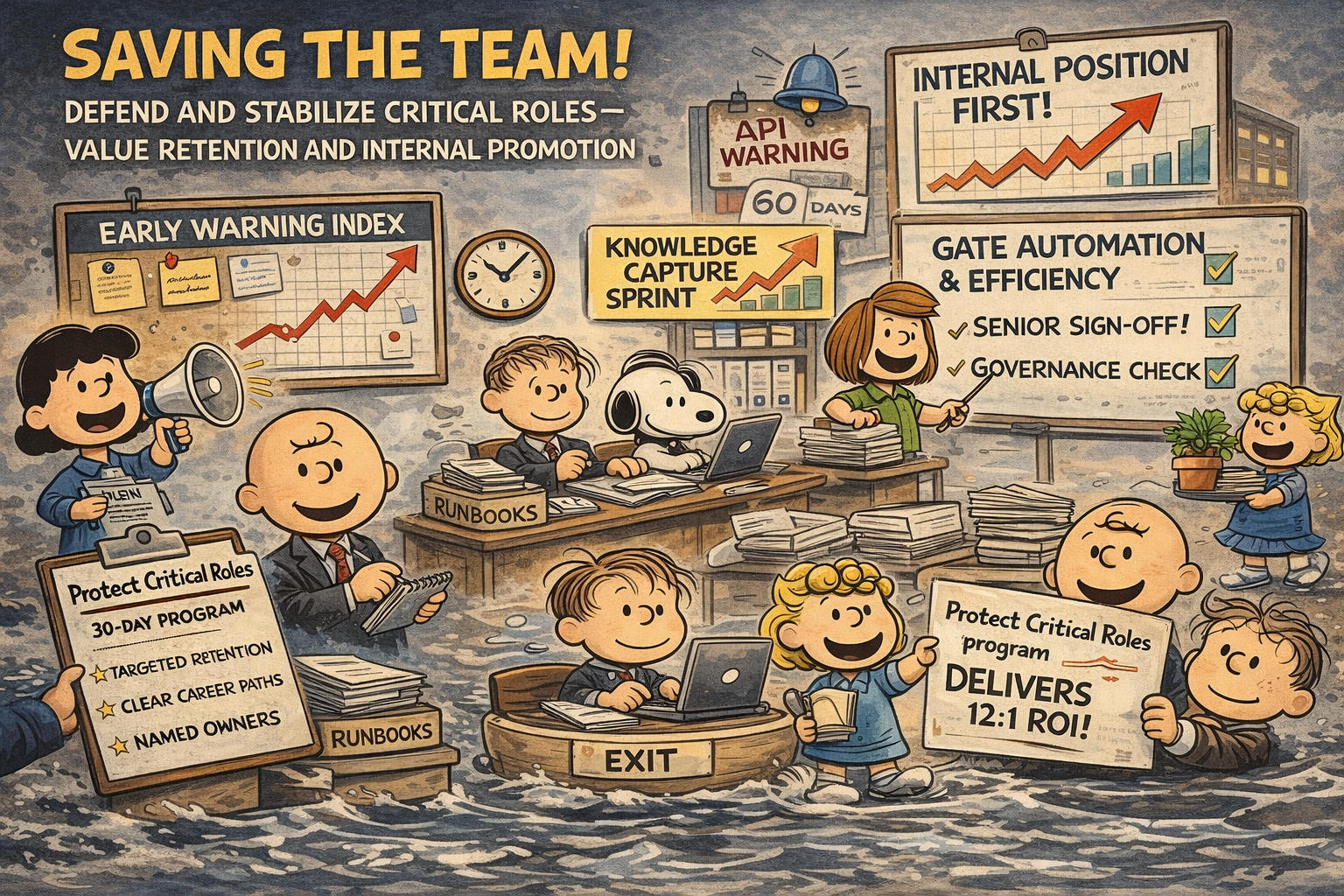
Solution summary. The fix isn’t more hiring. It’s intervention. Pause non-essential hiring into high-attrition teams, and redirect that spend into retention, onboarding, and internal promotions. Launch a focused program to protect critical roles — VP, Director, and other high-knowledge positions — with named owners and clear paths. Use the early-warning signal to trigger manager intervention roughly sixty days before predicted exits — coach, remediate, and fix root causes instead of backfilling. Run rapid knowledge-capture sprints — paired handovers, runbooks, and recorded decision logs — and prioritize internal redeployment to fill mid-level gaps. Gate automation and efficiency projects in teams that have lost expert oversight, requiring senior sign-off and post-deployment governance. Finally, measure leaders on retained experience, not headcount — tracking knowledge-at-risk, net experience, and hiring versus replacement. This is how you stop the cycle. Not by hiring faster — but by protecting the roles that keep the business running.

End of Briefing

This concludes the Workforce Risk Briefing.

To replay the briefing, refresh the page.

Want the full breakdown, extended charts, and working logic?

View Full Project on Google Colab →